Enterprise Transformation · Global Capital Markets
Designing a Scalable Change Management Operating Model
Designed an ADKAR-based framework connecting product delivery, tailored change interventions and readiness diagnostics to support consistent organisational change.
- Role
- Lead Change Manager (Director)
- Sector
- Commercial real estate
- Scope
- Global change management framework
Sanitised executive briefing · confidential details generalised

01 · Context
Establish a modular approach to change management for Global Capital Markets, so that organisational change could be delivered consistently.
Chapter 01
Product & Change Alignment
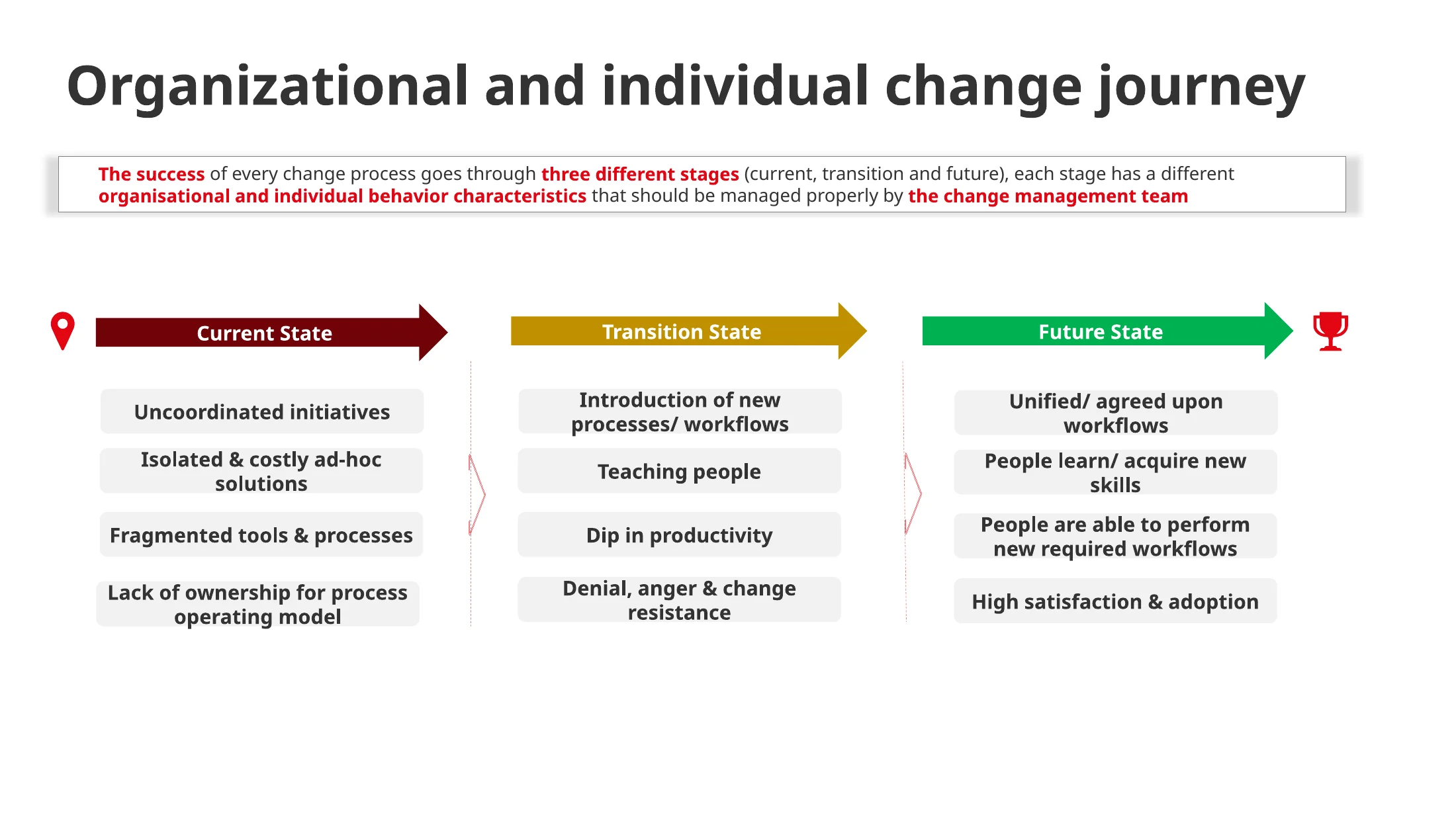
The operating model connects Discover, Define, Develop, Deliver and Operate with the human change journey. Assessment comes first; Awareness and Desire support the current state, Knowledge and Ability the transition, and Reinforcement the future state.
Exhibit 1.1 · Organisational and individual change journey
Chapter 02
Assessment & Change Planning
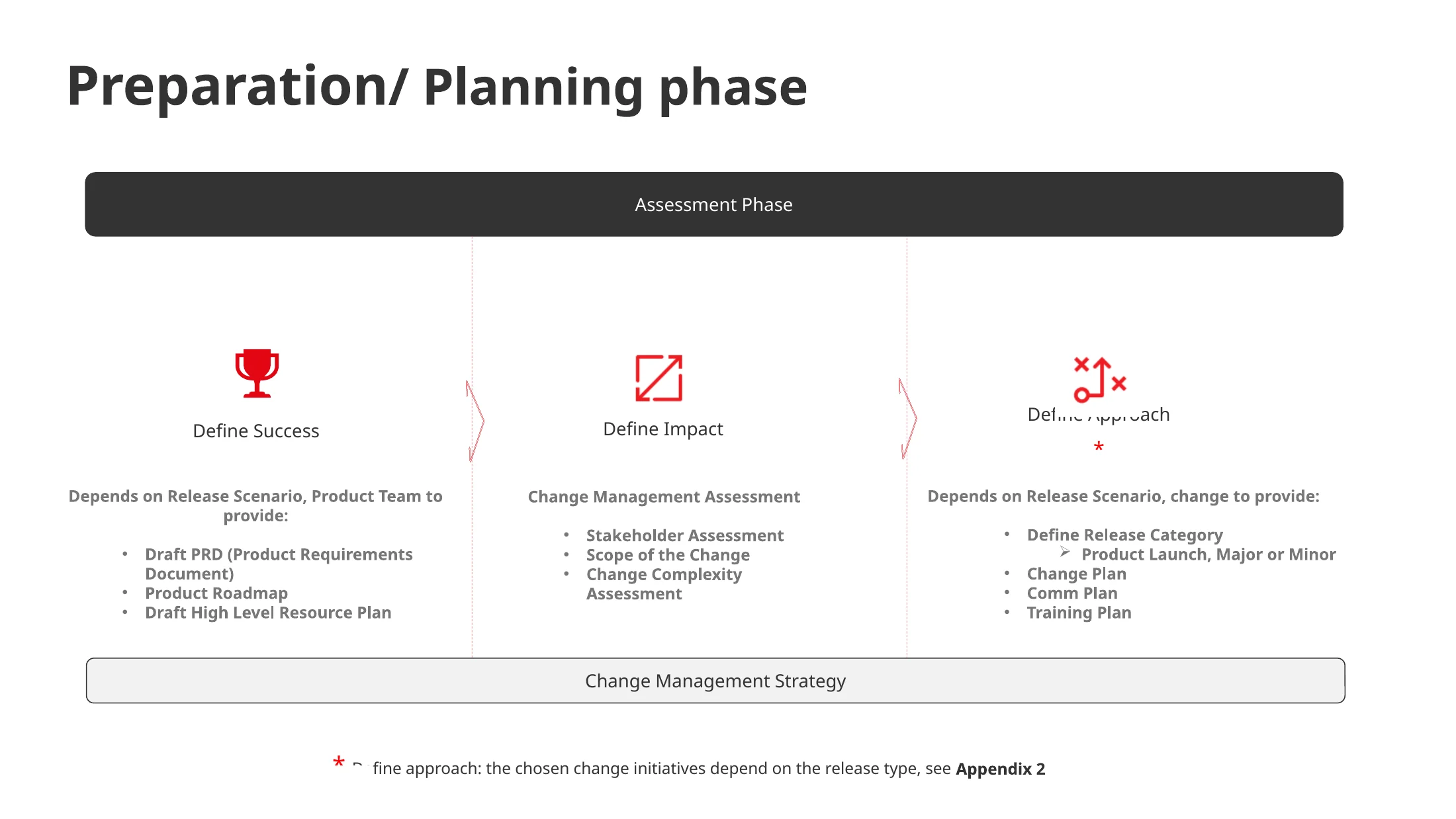
Planning starts with what the product team already has. A draft product requirements document, the roadmap and a high-level resource plan feed a structured change assessment. That assessment decides the release category, and the category decides how much change effort a release gets.
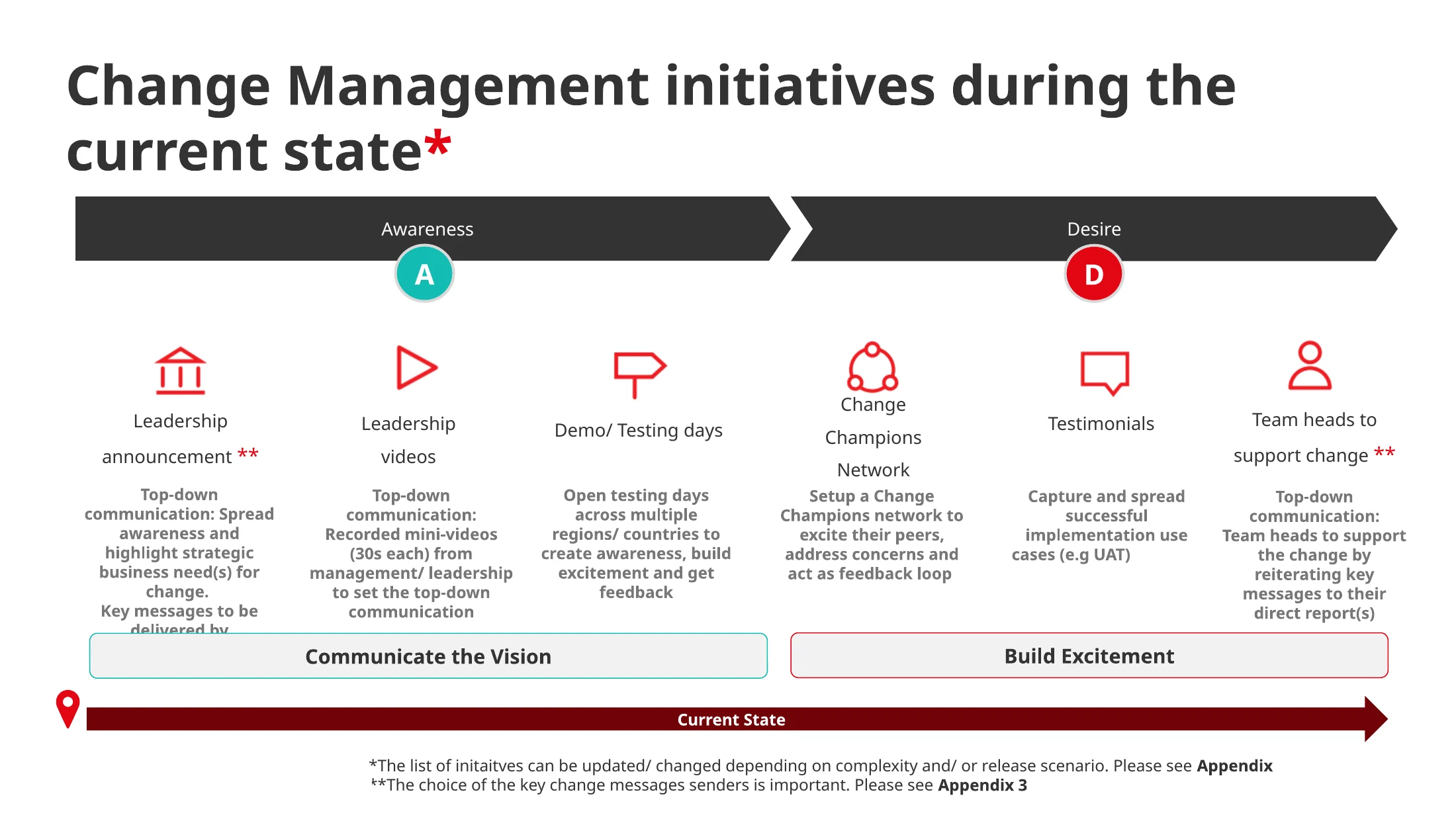
Communication follows a preferred-senders principle. People hear the organisational messages (the vision, why we are changing, the risk of not changing) from leadership. The personal messages (what it means for me and my team) come from their own team heads. Updates from the project team alone don't land.
Exhibit 2.1 · Preparation and planning phase
Chapter 03
The Change Management Framework
ADKAR provides the design logic for the framework: each element has an explicit goal and an intervention approach. The model moves from understanding the need for change to applying new skills and sustaining the new way of working.
The supporting exhibit describes the symptoms the model associates with a missing element—not observed results from a deployment.
Exhibit 3.1 · Change management initiatives during the current state
Chapter 04
Change Initiatives by Release Type
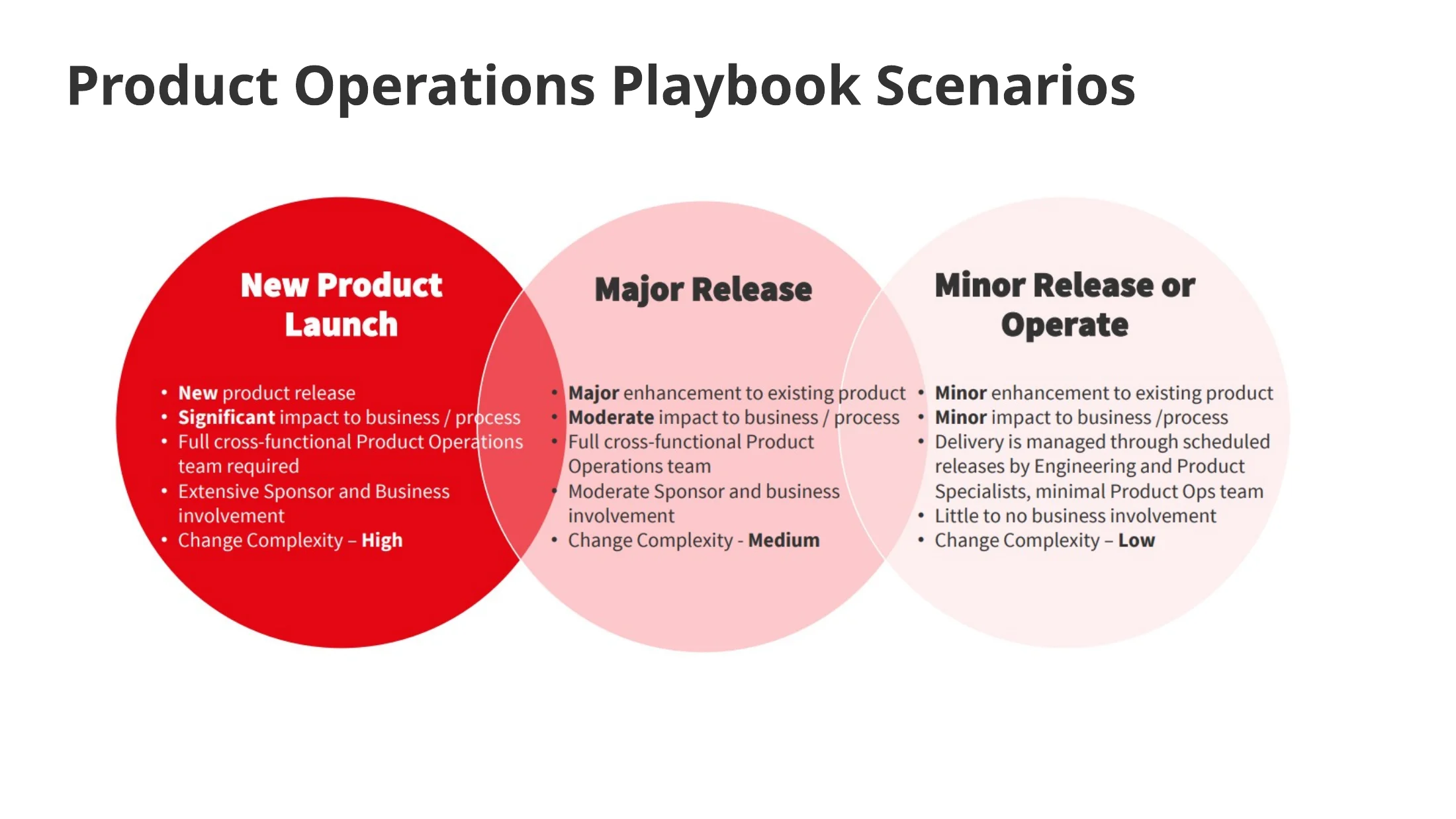
A new product launch, a major release and a minor BAU update don't need the same effort. The framework defines one shared toolkit of interventions for each ADKAR element, then sizes and tailors it to the release category set during assessment.
For example, a new product launch gets training materials built for it, while major and minor releases get revised versions of existing materials.
Exhibit 4.1 · Product operations playbook scenarios
Chapter 05
Diagnosis & Corrective Actions
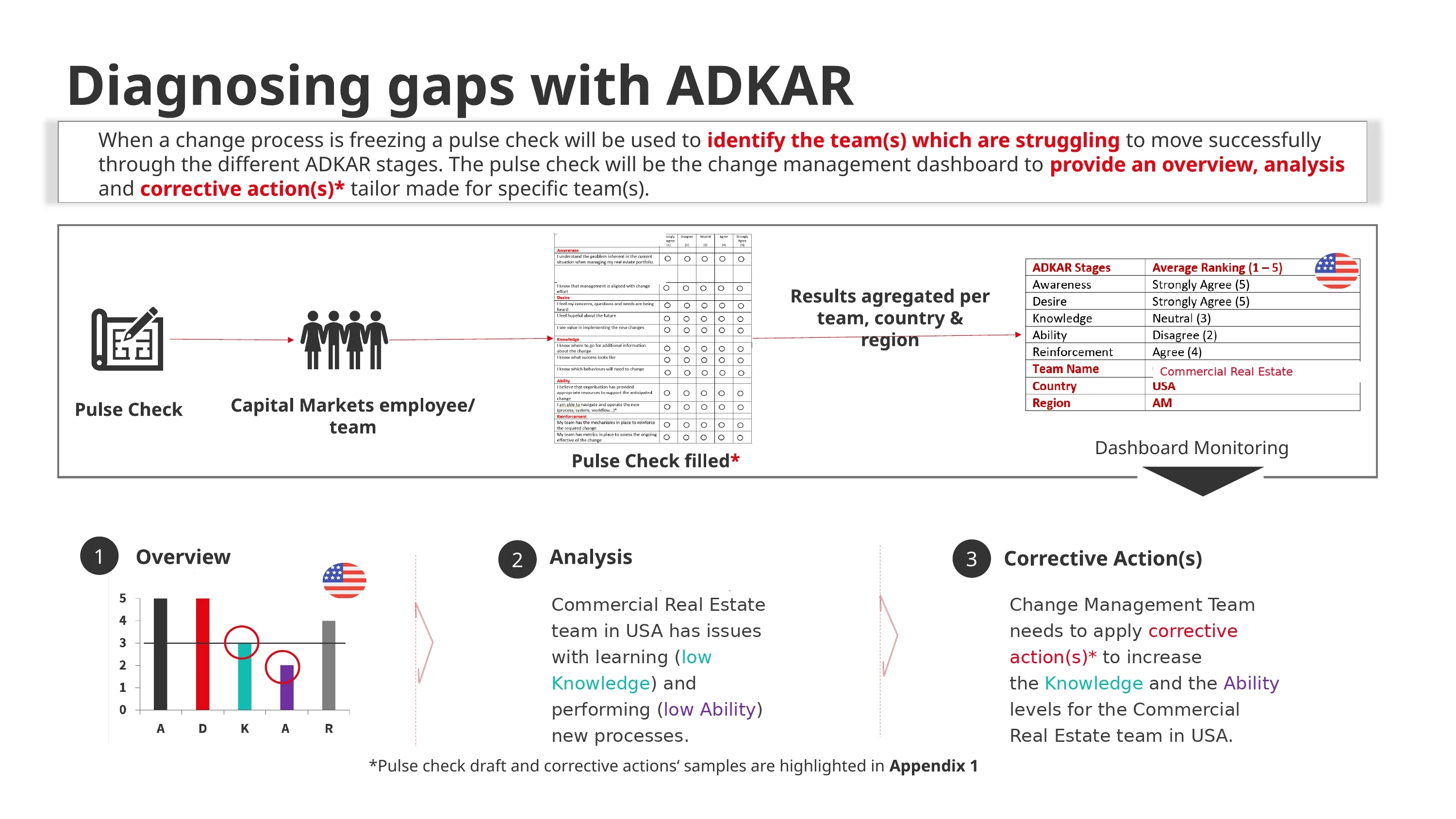
The proposed diagnostic mechanism uses a short ADKAR pulse check, aggregated by team, country and region, to identify a barrier to change and choose a targeted response. Diagnosis feeds back into intervention planning rather than ending at a dashboard.
The exhibit explains the mechanism designed—not a live dashboard, actual survey findings or measured performance.
Exhibit 5.1 · Diagnosing gaps with ADKAR
07 · My role
- Mapped product lifecycle phases to change states and ADKAR, bringing adoption planning into the product delivery model.
- Defined the assessment-to-plan sequence: product inputs, stakeholder impact and complexity determine the release category and the change plans.
- Designed a shared ADKAR intervention toolkit, with purpose-built training for new launches and revised materials for subsequent releases.
- Separated leadership-led organisational messages from team-head-led personal messages through the preferred-senders principle.
- Designed the pulse-check diagnostic and targeted corrective-action model to connect identified ADKAR gaps with specific interventions.
08 · Evidence
The modular change framework was adopted as the standard for Global Capital Markets.
Outcome supplied by Nabil Bertal. Internal framework deliverables are not published here.